💬 Download our FREE HR Audit. Click here!

Most workplaces carry out some form of safety check. You walk the site, look for hazards, check equipment and make sure everything appears to be in order. These checks are an important part of workplace health and safety, but they only tell you what the workplace looks like at that point in time. They do not necessarily tell you whether your team understands the procedures that are in place, knows where to find them or would know what to do if something actually went wrong.
That is where staff awareness becomes just as important as the physical inspection itself. A workplace can look safe on the day of an inspection, but if employees are unsure about the procedures they are expected to follow, there can still be a gap in your WHS processes. The question is not only whether the workplace looks safe, but whether your people understand how to keep it safe.
A site walk looks at the physical workplace. You might be checking that walkways are clear, guards are in place, fire extinguishers are current and there are no obvious hazards that need attention. It gives you a snapshot of what is happening on the day and helps answer the question, “Is this workplace safe right now?”
Staff awareness looks at something slightly different. It focuses on whether your employees know the procedures that apply to their work, whether they have completed the required training and whether they could explain what to do if an incident occurred. It helps answer the question, “Would my team know what to do without me standing beside them?”
Both are important. Having a WHS procedure sitting in a folder is only part of the process. Your team also needs to know that the procedure exists, understand how it applies to their role and know what is expected of them in practice. Regular communication and training help make sure your WHS processes are being used in the workplace, rather than simply documented and forgotten about.
Workplace inspections should not be treated as a once-a-year task. How often you carry them out will depend on the type of work you do and the level of risk involved. A higher-risk workplace may need more frequent checks, while other workplaces may require a different approach. The important thing is to have a regular process in place, make sure inspections actually happen and follow up when something needs attention.
Regular inspections can also help you identify patterns over time. If the same issue keeps appearing, it may be a sign that the existing control is not working as well as it should, or that staff need additional guidance or training. A good inspection process should help you identify what needs to change, not simply tick a box.
Your employees are the people doing the work every day, so they should be part of the conversation when you are identifying workplace risks. They often know where problems occur, which tasks create challenges and where a procedure might look good on paper but not work as well in practice. That practical knowledge can be extremely useful when you are reviewing or developing your Risk Register.
Building your Risk Register with your team also helps make sure it reflects your actual workplace, rather than relying on a generic template. When employees are involved in identifying the risks and discussing the controls that are in place, they are also more likely to understand why those controls matter and how they are expected to use them.
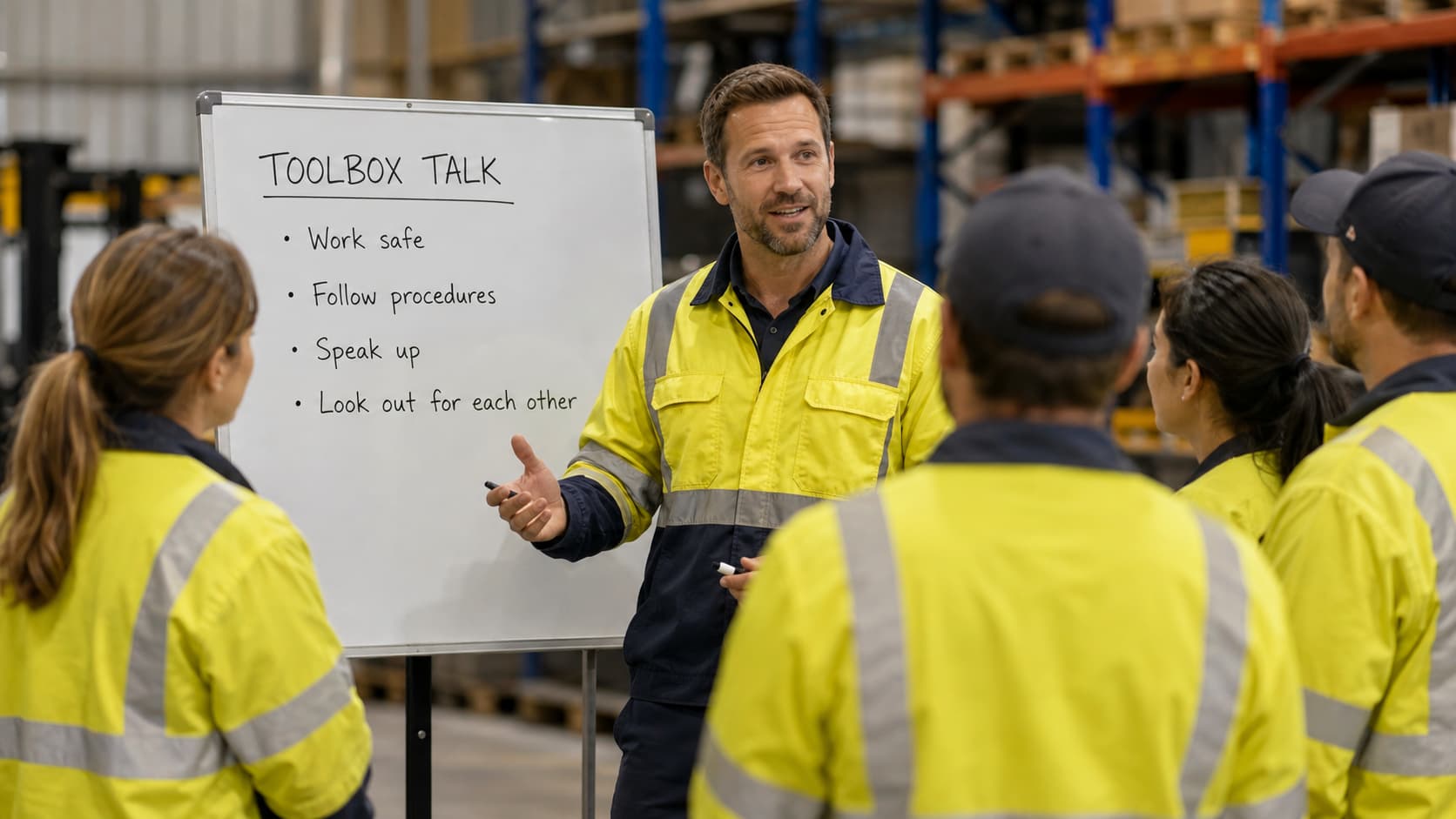
Toolbox talks do not need to be complicated or time-consuming. A short conversation about a procedure, hazard or recent issue can be a practical way to remind employees what is expected, answer questions and check that everyone has understood the information. Ten minutes spent talking something through can often be more useful than another document being added to a folder that nobody reads.
It is also important to keep a record of those conversations. Signed inductions, toolbox talk records, training registers and completed incident reports can all help demonstrate that your WHS processes are being communicated and used within the workplace. Keeping these records also gives you a clearer picture of what training has been completed and where further follow-up may be needed.
There is a simple way to find out. Choose one of your WHS procedures and ask a few employees what they would do. If everyone gives you a different answer, they are not sure where to find the procedure or they cannot remember the last time it was discussed, it may be worth taking another look at how that information is being communicated.
These conversations do not need to be about catching people out. They can help you identify where there are gaps in knowledge, where further training may be useful and whether your procedures are actually working in practice.
HR Dynamics can assist with toolbox talks and Risk Registers, working with your team to put practical WHS processes in place that make sense for your workplace.
Want a quick overview of what to check?
DISCLAIMER
The information available on this website is intended to be a general information resource regarding matters covered and it is not tailored to individual specific circumstances or intended as a substitute for legal advice. Although we make strong efforts to make sure our information is accurate, HR Dynamics cannot guarantee that all the information on this website is always correct, complete, or up-to-date. HR Dynamics recommendations and any information obtained on this website do not constitute legal advice.